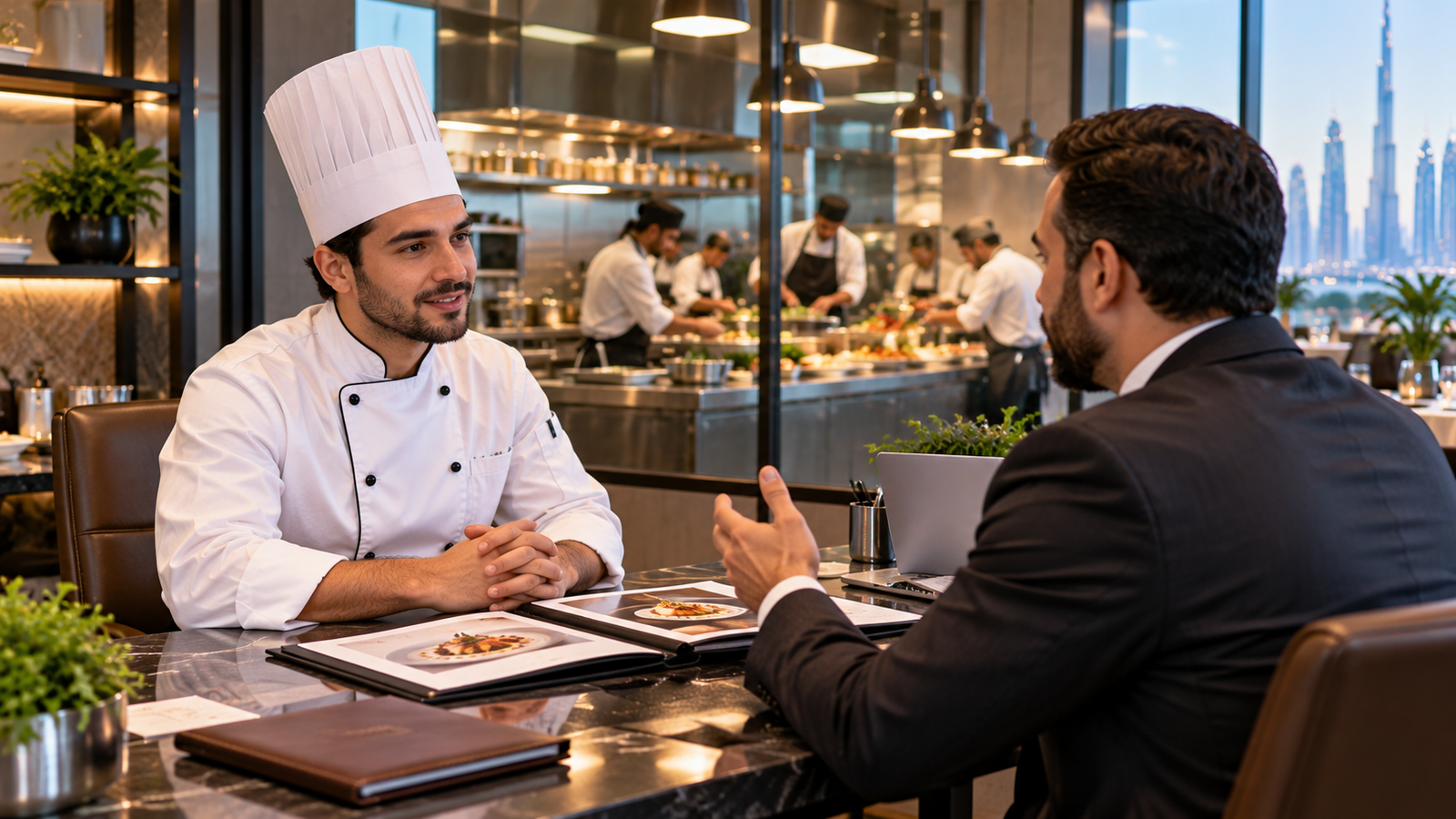
Top 20 Chef Interview Questions and Answers in Dubai: Complete Preparation Guide
The top 20 chef interview questions commonly focus on cooking techniques, food safety, kitchen organization, teamwork, time management, menu planning, and professional experience. To pass a chef interview in Dubai, candidates should demonstrate practical culinary knowledge, confidence, discipline, and the ability to work efficiently in a professional kitchen.
Whether you are applying for a Commis Chef, Chef de Partie, Sous Chef, or Executive Chef position, understanding common chef interview questions and answers can significantly improve your preparation.
Dubai's hospitality industry includes luxury hotels, fine-dining restaurants, catering companies, resorts, and international restaurant groups. Employers look for culinary professionals who can maintain food quality, follow hygiene standards, communicate effectively, and perform under pressure.
This guide covers the most common chef interview questions in Dubai, sample answers, technical culinary questions, food safety scenarios, and practical interview preparation strategies.
Why Is Chef Interview Preparation Important in Dubai?
Professional chef interviews evaluate more than your ability to prepare delicious food.
Employers want to understand your technical cooking knowledge, professional attitude, teamwork skills, and ability to maintain consistent kitchen performance.
In Dubai, chefs frequently work in multicultural teams and prepare international cuisines for customers with different preferences.
During interviews, employers may evaluate:
- Knowledge of professional cooking techniques.
- Understanding of food safety and hygiene.
- Experience using commercial kitchen equipment.
- Ability to work under pressure.
- Kitchen organization and time management.
- Communication and teamwork.
- Menu planning and food presentation.
- Leadership and kitchen management skills.
Preparing clear answers demonstrates your understanding of professional kitchen responsibilities.
The following sample answers should be adapted to reflect your actual skills, qualifications, and experience.
Top 20 Chef Interview Questions and Answers
1. Tell Me About Yourself and Your Culinary Experience
Sample Answer:
"I am passionate about professional cooking and developing my culinary skills. I have learned food preparation, basic cooking techniques, kitchen hygiene, and recipe execution through my training and practice. I enjoy working in organized environments where teamwork and food quality are important. My goal is to continue learning from experienced chefs and build a successful culinary career."
Interview Tip: Briefly highlight relevant training, experience, cooking specializations, and career goals. Keep your introduction professional and focused on the job.
2. Why Do You Want to Become a Chef?
Sample Answer:
"I want to become a chef because I enjoy cooking, experimenting with ingredients, and creating food that customers appreciate. I am interested in learning professional cooking techniques and understanding how commercial kitchens operate. I also enjoy the teamwork, creativity, and continuous learning involved in the culinary profession."
Interview Tip: Demonstrate genuine interest in the profession rather than focusing only on salary or employment benefits.
3. Why Do You Want to Work in Our Hotel or Restaurant?
Sample Answer:
"I am interested in joining your kitchen because of its culinary standards, menu style, and professional working environment. I believe this position will allow me to contribute my existing skills while developing further expertise. I am particularly interested in learning your kitchen procedures and helping maintain consistent food quality."
Interview Tip: Research the establishment's cuisine, menu, and dining concept before attending the interview.
4. What Are Your Greatest Strengths as a Chef?
Sample Answer:
"My strengths include attention to detail, time management, teamwork, and willingness to learn. I focus on preparing ingredients correctly, following recipes, maintaining cleanliness, and completing tasks efficiently. I also accept feedback positively because improving my cooking techniques and professional performance is important to me."
Interview Tip: Mention strengths that match the specific responsibilities of the position.
5. How Can You Work as a Chef Without Previous Experience?
Sample Answer:
"Although I am beginning my professional culinary career, I have developed foundational cooking skills through practical training and personal practice. I understand basic food preparation, kitchen hygiene, and recipe procedures. I am ready to start with entry-level responsibilities, follow instructions carefully, and learn from experienced chefs."
Interview Tip: This is particularly important for chef interview questions for freshers. Demonstrate transferable skills without claiming experience you do not have.
Technical Chef Interview Questions and Answers
Technical chef interview questions assess your understanding of cooking methods, kitchen procedures, and food preparation standards.
6. What Is Mise en Place, and Why Is It Important?
Sample Answer:
"Mise en place is a French culinary term meaning everything in its place. It involves preparing and organizing ingredients, equipment, and cooking stations before service begins. Proper mise en place improves efficiency, reduces mistakes, saves preparation time, and helps chefs maintain consistent food quality during busy kitchen operations."
Interview Tip: Give a practical example, such as measuring ingredients, preparing vegetables, and arranging cooking equipment before service.
7. What Are the Main Cooking Methods Used in Professional Kitchens?
Sample Answer:
"Professional kitchens use several cooking methods, including boiling, steaming, sautéing, frying, roasting, grilling, braising, and poaching. Each technique uses different heat and moisture conditions. For example, grilling uses direct heat, while braising combines initial browning with slow cooking in a covered vessel using a small amount of liquid."
Interview Tip: Be prepared to demonstrate the methods most relevant to the kitchen position you are applying for.

8. How Do You Maintain Consistent Food Quality?
Sample Answer:
"I maintain consistency by following standardized recipes, measuring ingredients accurately, controlling cooking time and temperature, and checking presentation before service. I also follow portion control guidelines and communicate with senior chefs whenever adjustments are required. Consistency ensures customers receive the expected quality every time."
Interview Tip: Employers value consistency because it affects customer satisfaction, operational efficiency, and restaurant reputation.
9. What Is the Difference Between Stock, Broth, and Sauce?
Sample Answer:
"Stock is generally prepared by simmering bones, vegetables, and aromatics, while broth is commonly made with meat, vegetables, or both and may be seasoned for direct consumption. A sauce is a prepared accompaniment that adds flavor, texture, and moisture to a dish. Stocks and broths are often used as foundations for sauces and soups."
Interview Tip: Learn fundamental stocks, classical mother sauces, and basic sauce preparation techniques.
10. How Do You Ensure Meat and Poultry Are Cooked Safely?
Sample Answer:
"I follow approved cooking procedures and check food temperatures using a properly maintained food thermometer. I avoid relying only on appearance or color. I also prevent cross-contamination, handle raw products separately, and follow the establishment's food safety procedures and applicable temperature requirements."
Interview Tip: Understand safe cooking temperatures and the correct use of probe thermometers for the products you prepare.
Food Safety and Hygiene Interview Questions
Food safety and hygiene interview questions are especially important for professional kitchen positions.
11. What Food Safety Practices Do You Follow in a Kitchen?
Sample Answer:
"I follow proper handwashing procedures, maintain clean workstations, store ingredients correctly, prevent cross-contamination, and monitor food temperatures. I also follow approved cleaning schedules, allergen procedures, and workplace food safety policies. I understand the importance of reporting hygiene risks immediately to the responsible supervisor."
Interview Tip: Familiarize yourself with HACCP principles and relevant Dubai Municipality food safety requirements.
12. How Do You Prevent Cross-Contamination?
Sample Answer:
"I prevent cross-contamination by separating raw ingredients from ready-to-eat foods, using designated equipment and preparation areas, and cleaning and sanitizing surfaces correctly. I also wash my hands between tasks and follow approved food storage procedures to avoid transferring harmful microorganisms or allergens."
Interview Tip: Explain how you would handle raw poultry and ready-to-eat salad ingredients during the same service period.
13. How Would You Handle a Customer With a Food Allergy?
Sample Answer:
"I would confirm the customer's allergy information through the appropriate service procedures and communicate it clearly to the kitchen team. I would verify ingredients, check possible cross-contact risks, and follow the establishment's allergen management procedures. If the dish cannot be prepared safely, I would inform the responsible manager rather than make an unsafe assumption."
Interview Tip: Demonstrate that food allergy requests require careful verification and communication.
14. What Would You Do if You Found Improperly Stored or Expired Food?
Sample Answer:
"I would stop the ingredient from being used and immediately inform the responsible supervisor. I would follow the establishment's procedures for identifying, isolating, and disposing of unsafe food. I would also help investigate the storage problem and take appropriate steps to prevent it from happening again."
Interview Tip: Food safety must take priority over avoiding waste or completing service quickly.
Kitchen Management and Leadership Interview Questions
Chef de Partie, Sous Chef, and Executive Chef candidates are frequently evaluated on their ability to coordinate employees and maintain efficient kitchen operations.
15. How Do You Handle Pressure During Busy Kitchen Service?
Sample Answer:
"I handle pressure by preparing my workstation in advance, prioritizing tasks, and maintaining clear communication with the team. During busy service periods, I focus on accuracy, organization, and working efficiently without compromising hygiene or food quality. If problems occur, I communicate them early and help find practical solutions."
Interview Tip: Use a real example from your previous employment or supervised culinary training when available.
16. What Would You Do if a Customer Complained About a Dish?
Sample Answer:
"I would take the complaint seriously and coordinate with the service team or supervisor to understand the issue. I would check whether the dish meets the restaurant's standards and arrange an appropriate correction or replacement. I would also review the cause to help prevent similar complaints."
Interview Tip: Demonstrate accountability, professionalism, and a commitment to customer satisfaction.
17. How Do You Handle Conflict Between Kitchen Employees?
Sample Answer:
"I approach workplace conflicts calmly and professionally. I listen to the employees involved, understand the cause of the disagreement, and encourage respectful communication. My priority is resolving the issue fairly while maintaining teamwork and service efficiency. Serious or unresolved concerns should be escalated through the appropriate management procedures."
Interview Tip: Sous Chef and senior chef candidates should provide examples demonstrating leadership and conflict-resolution skills.
18. How Do You Reduce Food Waste and Control Kitchen Costs?
Sample Answer:
"I reduce food waste through accurate inventory management, proper food storage, portion control, standardized recipes, and production planning. I also monitor ingredient usage and identify opportunities to use suitable ingredients efficiently. Regular food cost reviews help maintain profitability without compromising food quality or safety."
Interview Tip: Understand food cost percentage, purchasing procedures, inventory rotation, and menu profitability.
19. How Would You Manage a Kitchen Section or Supervise Junior Chefs?
Sample Answer:
"I would organize daily preparation tasks, assign responsibilities according to employee abilities, and ensure ingredients and equipment are ready before service. I would monitor cooking standards, provide clear instructions, and support junior chefs when necessary. I would also maintain hygiene standards and communicate operational issues to senior management."
Interview Tip: This is particularly relevant to Chef de Partie and Sous Chef interviews.
20. How Would You Develop a Profitable Menu as an Executive Chef?
Sample Answer:
"I would analyze customer preferences, ingredient availability, food costs, preparation requirements, and the restaurant's identity. I would develop dishes that balance quality with operational efficiency and profitability. I would also monitor menu performance, customer feedback, and ingredient costs to identify opportunities for improvement."
Interview Tip: Executive Chef candidates should understand menu engineering, purchasing, financial planning, kitchen leadership, and long-term culinary strategy.
Chef Interview Preparation Based on Job Position
Different culinary positions require different levels of technical knowledge and professional responsibility.
Commis Chef Interview Questions and Preparation
Commis Chef interviews typically emphasize basic cooking skills, kitchen hygiene, willingness to learn, and teamwork.
Beginners should prepare to explain their culinary training, knife skills, food preparation methods, and understanding of workstation organization.
Employers may also evaluate whether candidates can follow instructions and work efficiently during service.
Chef de Partie Interview Questions and Preparation
Chef de Partie interviews focus on station management, cooking consistency, ingredient organization, and supervision of junior employees.
Candidates should demonstrate experience operating a specific kitchen section and maintaining preparation standards.
Be prepared to discuss how you organize daily production and coordinate with other stations.
Sous Chef Interview Questions and Preparation
Sous Chef interviews assess leadership, kitchen scheduling, quality control, staff training, and food cost management.
Experienced candidates should prepare examples of managing difficult service periods, resolving employee problems, and supporting senior culinary management.
Executive Chef Interview Questions and Preparation
Executive Chef interviews are often more management-focused.
Candidates may be questioned about menu strategy, profitability, recruitment, purchasing, operational performance, and culinary leadership.
Prepare measurable examples from previous roles, such as improvements in kitchen productivity, food costs, customer satisfaction, or staff development.
What Happens During a Chef Practical Interview?
A chef practical interview, sometimes called a cooking trial or trade test, allows employers to evaluate a candidate's cooking skills directly.
Depending on the position, candidates may be asked to:
- Demonstrate knife-cutting techniques.
- Prepare a basic stock, soup, or sauce.
- Cook eggs using a specified technique.
- Prepare a meat, fish, or vegetable dish.
- Follow a standardized recipe.
- Organize a workstation before cooking.
- Plate a finished dish professionally.
- Demonstrate proper food hygiene.
Senior candidates may be asked to prepare a menu or develop dishes within specified ingredient and cost requirements.
During practical assessments, employers may observe preparation methods, cleanliness, timing, communication, presentation, and final food quality.
Candidates should confirm the assessment format, location, duration, and employment authorization requirements beforehand.
How to Pass a Chef Interview in Dubai
Successful chef job interview preparation requires both theoretical understanding and practical confidence.
Research the Employer
Understand the restaurant's cuisine, menu concept, service style, and operational environment.
This helps you explain why your skills match the available position.
Review Technical Culinary Knowledge
Revise basic cooking methods, stocks, sauces, knife skills, food preparation procedures, and ingredient handling.
Focus on techniques relevant to your chosen job.
Practice Food Safety Questions
Review personal hygiene, allergen awareness, temperature monitoring, cross-contamination prevention, and safe ingredient storage.
Food safety knowledge is essential in professional kitchens.
Prepare Real Examples
If you have previous kitchen experience, prepare short examples demonstrating teamwork, problem-solving, and cooking performance.
Beginners can use examples from practical culinary training without exaggerating their experience.
Demonstrate Professionalism
Arrive punctually, wear appropriate professional clothing, communicate respectfully, and answer questions clearly.
Show enthusiasm for learning while remaining realistic about your abilities.
Common Chef Interview Mistakes to Avoid
Candidates sometimes make avoidable mistakes that reduce their chances of securing employment.
Common mistakes include:
- Attending without researching the restaurant or hotel.
- Exaggerating culinary experience or qualifications.
- Demonstrating weak food hygiene knowledge.
- Giving vague answers without practical examples.
- Failing to explain basic cooking methods.
- Speaking negatively about previous employers.
- Ignoring teamwork and communication responsibilities.
- Focusing only on salary rather than job responsibilities.
Preparation helps candidates demonstrate their professional attitude and suitability for the position.
Frequently Asked Questions About Chef Interviews in Dubai
1. What Are the Most Common Chef Interview Questions in Dubai?
Common chef interview questions include explaining your culinary experience, discussing cooking techniques, describing food hygiene procedures, handling busy service periods, and demonstrating teamwork. Senior chef interviews may also include questions about inventory management, food costs, employee supervision, and menu planning.
2. How Do I Prepare for a Commis Chef Interview Without Experience?
Focus on basic culinary knowledge, food preparation techniques, kitchen hygiene, and willingness to learn. Review common cooking methods, practice knife skills, and prepare examples from your culinary training. Employers may prioritize professional attitude, fundamental skills, and the ability to follow instructions.
3. What Technical Questions Are Asked in Chef Interviews?
Technical chef interview questions commonly cover cooking methods, knife skills, stocks, sauces, ingredient preparation, food temperatures, storage procedures, and plating techniques. The complexity depends on the position. Senior candidates may also face technical questions about menu engineering and production management.
4. Do Hotels in Dubai Conduct Practical Chef Interviews?
Some hotels and restaurants use cooking trials or trade tests to evaluate culinary candidates. These assessments may involve preparing specific dishes, demonstrating cooking methods, or organizing a workstation. Requirements vary according to the employer, position, and candidate's experience.
5. What Should I Wear to a Chef Interview?
For a formal interview, wear clean, neat, professional clothing unless the employer provides different instructions. If a cooking assessment is scheduled, confirm whether you need to bring chef whites, suitable kitchen footwear, or other approved equipment. Personal hygiene and professional presentation are important.
6. How Can I Answer Chef Interview Questions Confidently?
Prepare concise answers using your actual culinary knowledge and experience. Explain relevant techniques clearly, provide specific examples, and remain honest about skills you are still developing. Practicing common interview questions aloud can improve communication, confidence, and the ability to respond calmly.
7. What Food Safety Questions Should Chefs Prepare For?
Prepare questions about handwashing, food storage, cooking temperatures, cleaning procedures, cross-contamination, allergen management, and identifying unsafe ingredients. Employers want evidence that candidates understand the importance of following approved food safety procedures in commercial kitchens.
8. What Questions Should I Ask the Employer During a Chef Interview?
You can ask about the kitchen team structure, daily responsibilities, training opportunities, performance expectations, and career progression. You may also clarify working hours, reporting responsibilities, and the recruitment process. Relevant questions demonstrate professional interest and help you evaluate the opportunity.
Conclusion: Prepare Confidently for Your Chef Interview in Dubai
Understanding the top 20 chef interview questions and answers is an important step toward securing employment in Dubai's hospitality industry.
Whether you are a beginner applying for a Commis Chef position or an experienced professional preparing for a Sous Chef or Executive Chef interview, employers expect strong culinary knowledge, food safety awareness, teamwork, and professional discipline.
Beginners should focus on essential cooking techniques, practical kitchen training, and clear communication.
Experienced chefs should demonstrate technical expertise, leadership abilities, operational knowledge, and measurable professional achievements.
Professional culinary courses in Dubai can help aspiring chefs develop practical cooking skills and prepare for technical interview assessments.
With consistent practice, relevant culinary training, and thorough interview preparation, you can approach chef job interviews confidently and take the next step toward building a successful culinary career in Dubai.